

Have you ever wondered how fast we have come from Magnetic Drum storage to SSDs and Cloud storage? The evolution of Data storage is astonishingly rapid. In the 1950s, when Magnetic Drums were used as the starting point to store data, they had capacities of around 10 KB and were huge, slow, and mechanical.
We have come a long way from:
Mechanical (tapes, disks), Electronic (SSDs), Virtual (cloud, object storage), and soon to be Biological and Quantum (DNA storage, quantum bits).
Things have changed quickly; where Data storage used to be a physical asset we owned, it is now a digital asset we manage. Thanks to AWS S3, Google Drive, or Snowflake, multiple users can access data instantly from anywhere in the world. Let’s look forward to what the future holds for data storage.
In this blog, we will cover:
Current trends in data storage.
Emerging technologies that are shaping the future of data storage
Challenges and opportunities
What will the future of data storage be like?
The role of cloud storage in the future
Practical Considerations for Businesses
Why Data Storage Matters More Than Ever
Today, data is at the core of everything from personalized recommendations on your favorite apps to the complex decision-making of global enterprises. The value of storing, managing, and accessing data efficiently cannot be overstated.
As organizations collect data at unprecedented rates, whether from IoT devices, user activity, or business operations, the need for scalable, secure, and high-performance storage becomes critical.
Understanding the Future of Data Storage will play a crucial role in creating strategies that shape the future of organizations and keep them a step ahead. Without the right storage solutions, this massive volume of data is just noise. When properly stored and managed, it becomes actionable insight.
Moreover, data is no longer just a by-product of business; it is the business. For example:
Healthcare relies on fast access to patient records.
Finance needs real-time analytics to detect fraud.
E-Commerce uses past user behavior to drive future sales.
AI/ML models require petabytes of high-quality training data to be stored efficiently in order to evolve.
The Impact of Evolving Storage on the Data World
Every leap in storage technology has unlocked new possibilities:
The shift from HDDs to SSDs enabled lightning-fast retrieval speeds and reduced hardware failures.
Cloud storage has broken location barriers, enabling global teams to collaborate in real-time.
DNA and Quantum storage could redefine how we think about space, durability, and sustainability.
With the rise of big data, AI, and real-time analytics, future-ready storage is no longer optional. It’s a strategic differentiator.
Current Trends in Data Storage
In 1956, IBM’s first hard drive (RAMAC 305) could store 5 MB, weighing over a ton. Today, a microSD card smaller than your thumbnail can store 1 TB, 200,000 times more storage in a fraction of the space. Let’s look at the most commonly used current data storage methods.
Cloud Storage
Cloud Storage is a widely used method for storing data, as it can be accessed globally and automatically replicates data across multiple geographic regions. It ensures Disaster recovery, faster user access, and compliance with local data residency laws. Users can use cloud storage services according to their needs, for example.
AWS S3 has multiple storage classes (Standard, Intelligent-Tiering, Glacier, Glacier Deep Archive, etc), each optimized for cost vs retrieval time. S3 Glacier Deep Archive is the most cost-effective (~$1/TB/month), but retrieval may take 5-12 hours for a file.
When Cloud Storage is not ideal:
Strict Data Residency or Compliance Rules: when data needs to be in certain geographic boundaries or in-house
Cloud storage is now extremely fast and scalable; however, for ultra-low-latency workloads like high-frequency trading, even minor network delays can be significant. In such cases, on-premises or colocated setups may still be preferred.
Cost over time: Cloud costs may exceed those of on-premises options for large and frequently accessed datasets in the long run.
Solid State Drives (SSDs)
SSDs have revolutionized storage trends, as they perform superiorly and are more reliable than HDDs. SSDs have many benefits, including improved data transfer speed, an Enhanced Gaming Experience, and Noiseless Operations, as they lack moving parts.
Hybrid Storage
Hybrid storage combines different types of storage technologies, mainly Solid-State Drives and Hard Disk Drives, to balance performance, capacity, and cost efficiency. Hybrid Storage systems strategically integrate high-speed SSDs with high-capacity HDDs.
Benefits:
SSDs accelerate read/write operations for active workloads, and HDDs offer terabytes of storage at lower costs.
Automated tiering or caching systems move data between SSD and HDD based on usage history/pattern. Frequently accessed data stays on SSDs, while older or less-used data stays on HDDs.
SSDs consume less power and generate less heat; placing hot data on SSDs reduces the load on power-hungry HDDs.
When to Use Hybrid Storage:
|
Scenario |
Recommended Solution |
|---|---|
|
Need speed + large capacity |
Hybrid Storage |
|
Budget is limited |
HDD (or Hybrid) |
|
High performance, low latency needed |
All-SSD/Flash |
|
Long-term, infrequent data access |
HDD or cold cloud storage |
Emerging Technologies
As data generation continues to grow exponentially, the need for advanced storage solutions becomes critical. The following technologies represent promising innovations poised to shape the future of data storage.
DNA Storage
There is a lot of demand for Data storage emerging around the world. DNA carries natural genetic information and offers a stable and sustainable data storage solution. According to the current data generation rate, we may soon exceed the storage capacity of any currently available storage method, disregarding the cost of maintaining and transferring the data.
DNA can also help us store data efficiently and in a very small space. Nature is doing this Job of storing information in Deoxyribonucleic acid (DNA) in four bases: A (Adenine), T (Thymine), C (Cytosine), and G (Guanine)
For example:
00 = A, 01 = C, 10 = G, 11 = T
Once encoded, the data is synthesized into real DNA molecules and can later be read back through DNA sequencing. Tons of information about what a human will be, every detail from mind, muscle shape, hair, skin color, etc, is stored in a DNA strand.

Flow of information in DNA-based information Storage.
Top Left: Source coding converts digital data into binary or other formats.
Top Right: Channel coding adds extra bits for error detection and correction.
Bottom Right: Information storage encodes the data into DNA and stores it in vitro or in vivo.
Bottom Left: The Information readout reads the DNA and decodes it back into digital data.
Storing data in DNA and its retrieval works in Four Stages:
Encoding: Digital files are converted to base sequences.
Synthesis: These sequences are chemically created as DNA strands.
Storage: DNA is dried and stored in tiny vials.
Sequencing: Reading the DNA using a sequencer.
Decoding: DNA is sequenced and decoded back into digital data when needed.
DNA, with its high density and longevity, serves as a promising medium for data storage.
Technical Challenges
The field of storing data using DNA presents various obstacles, including errors in DNA synthesis and sequencing, as well as complexities in data retrieval. Additionally, DNA storage is currently more expensive per GB compared to SSDs or HDDs. Writing and reading are slow and not suited for real-time use.
Despite hurdles, DNA storage could become a viable option for archival purposes within a decade. With ongoing advancements in biotechnology, costs are expected to decrease, and new error-correction models may improve reliability.
Holographic Storage
Holographic storage is a technique that stores data in three dimensions using laser light. Unlike conventional methods that store data on the surface of a disk (such as CDs, DVDs, and Blu-ray), holographic storage enables information to be written throughout the entire volume of a material. This leads to dramatically higher data densities and faster read/write capabilities.
How It Works – A Simplified View
Encoding the Data: Digital information (like binary 1s and 0s) is converted into a 2D data page, which is then imposed on a laser beam.
Writing the Data: The data-carrying laser beam (object beam) meets a reference laser beam inside a special material (often a photopolymer). Their interference creates a 3D pattern/hologram.
Storing in Volume: By changing the angle or wavelength of the reference beam, multiple holograms can be stored in the same volume, a technique known as multiplexing.
Reading the Data: To retrieve data, the same reference beam is used to reconstruct the stored hologram, and a detector reads the pattern.
At the heart of holographic storage lies the concept of interference. When two laser beams intersect in a photosensitive material, one carrying the data (called the object beam) and the other acting as a reference (called the reference beam), they create a unique interference pattern.
This pattern represents the data and is stored in the medium as a hologram. To retrieve the data, the reference beam is shone back into the material, reconstructing the original object beam and allowing the stored information to be read.
Here, data is stored in a three-dimensional volume of material, allowing information to be stored throughout the material. This means a single holographic disc could potentially store terabytes of data, drastically surpassing current data storage capacities.
Challenges in Holographic Storage
This technology incurs high costs due to the expense of precision lasers and other specialized materials. Sufficient storage material is limited, as it must be both stable and durable. The mechanism for reading and writing is quite complex.
Quantum Storage
Quantum computers, unlike classical systems that rely on binary bits, use qubits—units capable of representing multiple states simultaneously due to quantum superposition. This allows them to process and represent vastly more data. In fact, a system with just 100 qubits can theoretically represent more states than all current global digital storage combined. As quantum computing scales, the amount of information it can handle could far surpass what’s physically possible with classical hardware.
A Significant Challenge
While quantum systems can process immense amounts of information, our current data storage technologies are not built to keep pace. Traditional storage methods rely on binary retrieval, which limits the amount of quantum-processed information that can be stored and accessed.
To unlock the full potential of quantum computing in fields like AI, optimization, and scientific discovery, there’s an urgent need for breakthroughs in quantum-native data storage technologies.
At the 2021 SNIA Storage Developers Conference, Doug Finke, Managing Editor of the Quantum Computing Report, highlighted the evolving relationship between quantum computing and storage technologies.
He discussed how advancements in storage and memory architectures are essential to support quantum computing, and conversely, how quantum computing itself could drive innovation and efficiency in the storage industry through enhanced discovery and optimization capabilities.
A proposed solution to the data storage challenge is the development of Quantum CDs, which are currently a key focus for researchers. Traditional optical disks are no longer sufficient to meet the massive storage demands of advanced technologies such as quantum computing, artificial intelligence, and machine learning. As a result, data storage has become a significant bottleneck, driving the need for next-generation storage solutions.
Looking Ahead
As we venture deeper into the future of information technology, data storage is undergoing a remarkable transformation, shifting from traditional magnetic and solid-state drives to atomic-scale storage, where individual atoms serve as the ultimate units of information. In atomic storage, binary data (0s and 1s) is encoded by manipulating the position or magnetic orientation of individual atoms, pushing classical storage density to its theoretical limits. This approach promises revolutionary advances in ultra-dense, stable, and long-term data archival.
A fascinating demonstration of this concept comes from IBM, where researchers used a scanning tunneling microscope to move atoms and create the world’s smallest movie, visible only when magnified 100 million times. This experiment beautifully illustrates the precision and potential of manipulating matter at the atomic level. You can watch the video here:
While quantum storage focuses on harnessing the superposition and entanglement of qubits for computational breakthroughs, atomic storage highlights the incredible potential of classical data storage in a form once thought to be only theoretical.
This table lists some upcoming Data Storage Technologies and their anticipated availability dates.
Technology | Estimated Availability | Impact |
|---|---|---|
DNA Storage | 2030+ | High capacity, long-term storage |
Holographic Storage | 2028+ | Large data volume, fast access |
Quantum Storage | 2035+ | Ultra-fast, complex data handling |
Improved SSDs | Ongoing | Faster speeds, larger capacities |
AI-Driven Storage | Ongoing | Automated management, optimization |
Challenges and Opportunities
Emerging technologies such as quantum, holographic, and DNA storage are poised to transform data storage. These innovations offer immense potential for information management and preservation, but their widespread implementation will require careful consideration of new challenges and opportunities.
Data Security
Challenge: As data transitions into unfamiliar formats, such as quantum states or synthetic DNA strands, traditional security measures may become ineffective.
Opportunity: These technologies pave the way for advanced encryption models, including quantum-resistant protocols and biologically encoded data that is inherently tamper-evident.
Scalability
Challenge: Early-stage technologies often struggle to match the scale and reliability of established storage systems. Hardware complexity and high costs pose barriers to widespread adoption.
Opportunity: These systems are inherently capable of handling extremely dense data. Once matured, they can store entire data centers’ worth of information in spaces as small as a sugar cube.
Accessibility
Challenge: Accessing and interacting with data stored in quantum states or DNA sequences requires specialized tools and expertise, which can limit short-term usability.
Opportunity: As interfaces improve and standardization grows, these formats could eventually offer faster, parallel access to data at unprecedented speeds.
Sustainability
Challenge: The environmental footprint of emerging storage tech is a growing concern, especially when considering energy-intensive setups for quantum systems.
Opportunity: In the long term, these technologies offer energy-efficient, long-lasting alternatives to traditional storage, particularly DNA storage, which remains stable for thousands of years with minimal maintenance.
The Role of Cloud Storage in the Future
Beyond simply housing data, cloud platforms are evolving into intelligent, integrated ecosystems that support advanced use cases across various industries. Cloud storage is not just an online space for storing data; it is evolving at a rapid pace, becoming increasingly intelligent and utilizing AI. A promising future lies in cloud data storage. This is the reason phData is focused on empowering employees with Cloud Certification to help customers leverage the Cloud at its best while staying within budget.
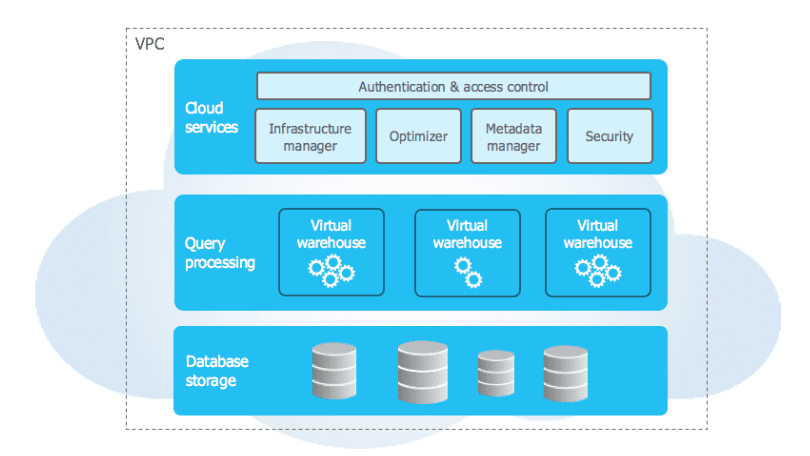
The future of cloud storage will be driven by intelligent automation. AI-powered storage solutions will optimize everything from data classification to lifecycle management and cost efficiency. For instance, AWS utilizes AI services like Amazon Macie to automatically discover, classify, and protect sensitive data stored in Amazon S3, thereby reducing human error and enhancing security compliance. Similarly, Snowflake’s cloud-native architecture (shown in the figure below) integrates with machine learning tools to automate performance tuning and recommend optimal storage and compute configurations based on workload behavior.
These AI-driven capabilities will not only reduce operational overhead but also enable real-time decision-making at scale, a critical requirement for businesses dealing with dynamic, high-volume data environments.
Practical Considerations for Business
As the volume of data generated by IoT devices, sensors, and real-time applications grows, cloud storage is shifting toward a more decentralized model. Edge computing plays a pivotal role in this evolution, allowing data to be processed closer to its source. This reduces latency, lowers bandwidth usage, and enables faster decision-making.
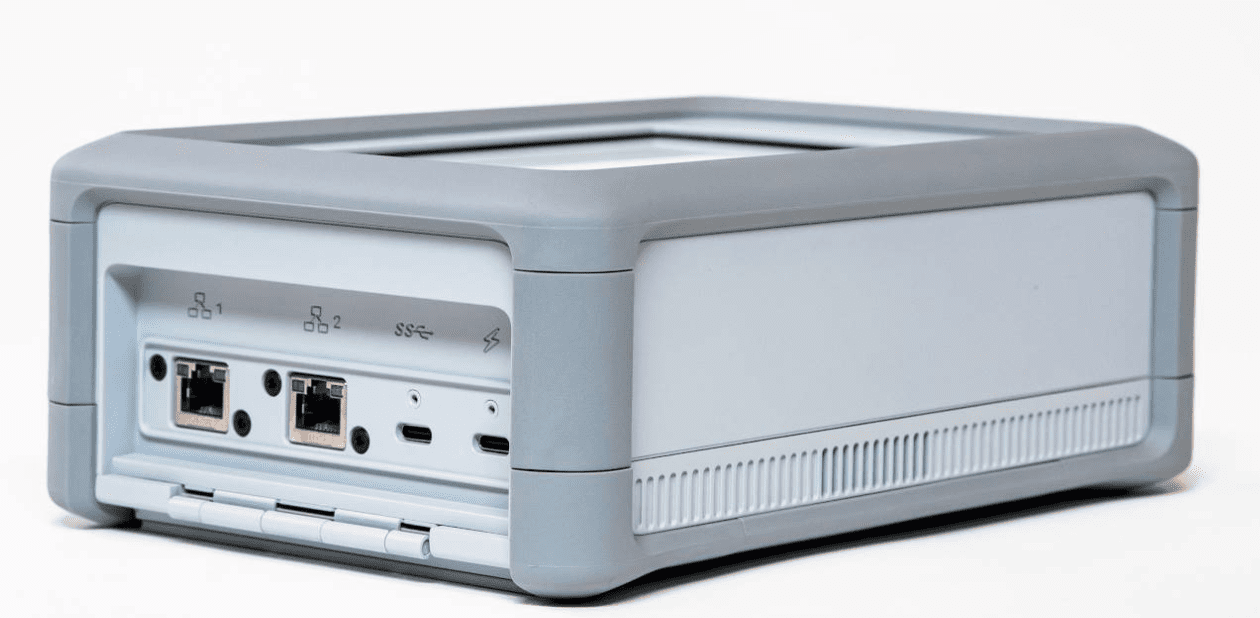
Technologies like AWS Snowcone and AWS Greengrass exemplify this shift, offering local data processing while staying connected to the broader cloud infrastructure. This hybrid model ensures only essential or refined data is transmitted to central cloud storage, enhancing efficiency and performance for time-sensitive operations.
Looking ahead, cloud storage will become increasingly integrated with other emerging technologies such as AI, blockchain, and augmented reality. Rather than operating in isolation, storage solutions will adapt intelligently based on usage patterns and data context.
Snowflake is leading in this area by offering seamless data sharing and multi-cloud access for analytics and AI workloads. Similarly, AWS provides a comprehensive ecosystem that connects Amazon S3, SageMaker, and IoT Core, enabling organizations to leverage their data across platforms and use cases. This convergence is paving the way for smarter, more agile, and interconnected data infrastructures.
One of the most significant shifts will be the rise of AI-driven automation in data management. Cloud platforms like AWS and Snowflake are already incorporating AI to streamline storage optimization, automate data classification, and improve security posture. This trend will enable businesses to manage data at scale with minimal manual intervention, thereby reducing operational overhead and enhancing decision-making capabilities.
For organizations that manage exceptionally large datasets, such as genomics labs, aerospace agencies, or media archives, DNA storage is emerging as a revolutionary solution for cold storage. Its unparalleled data density and long shelf life make it ideal for storing infrequently accessed information in a compact, sustainable format, potentially preserving data for hundreds of years with minimal energy use.
Closing
As we look ahead, it’s clear that the future of data storage is not just about storing more, but about storing smarter. From DNA strands that could hold entire libraries to quantum bits capable of reshaping computational possibilities, the storage landscape is evolving beyond imagination. Emerging technologies, such as holographic and quantum storage, offer unprecedented data density, speed, and sustainability, each presenting both exciting opportunities and critical challenges.
Meanwhile, cloud platforms like AWS and Snowflake are laying the foundation for a more intelligent, integrated, and automated data ecosystem, where AI, IoT, and edge computing converge to redefine how, where, and why data is stored. Businesses must begin preparing now by investing in scalable, secure, and forward-compatible storage strategies that not only meet today’s demands but are also resilient for the data-driven future.

Need advice on how you can be future-ready with your data storage?
phData’s data experts can help you assess your current environment and build a forward-compatible storage strategy that stays resilient as new technologies emerge. If you’re ready to take the next step, we’re here to help.
FAQs
What is the Future for Data Storage?
The future of data storage is shaped by cutting-edge innovations like DNA storage, quantum storage, holographic storage, and edge computing. These solutions promise to surpass traditional methods in scalability, speed, and efficiency. Additionally, the integration of AI will play a critical role in automating tasks such as data tiering, resource allocation, predictive maintenance, and intelligent backup strategies, making data management smarter and more resilient than ever before.
What is the next generation of data storage?
The next generation of data storage includes DNA storage, quantum storage, holographic storage, and edge computing. These emerging technologies show great potential to overcome current limitations in capacity, speed, and sustainability. In the coming years, we may witness their broader adoption and integration into mainstream data storage solutions.


