
Content is everywhere, and companies are under pressure to produce more of it, faster. That’s where AI tools have come into play. From writing product descriptions to drafting blog posts, systems like GPT-5, Claude, and Gemini can create polished content in seconds. But here’s the real question: can they truly replace a human writer?
This is the first entry in our AI vs Humans series, where we’ll explore how artificial intelligence is reshaping creative work. Let’s start with blog writing.
The Rise of AI Writing
experimenting with automated content generation. These tools can draft blog posts in seconds, maintain a professional tone, adapt to a desired style, and, in many cases, offer insights based on recent data.
Platforms such as Jasper and Copy.ai, or more advanced integrations with OpenAI combined with vector engines like Pinecone, are taking this capability to the next level.
Advantages of AI as a Writer
AI has some undeniable strengths:
Speed: What takes a human hours, AI can do in seconds.
Scale: Need a hundred blog posts in a week? AI won’t complain, it just keeps going.
Consistency: Same tone, same style, across every piece of content.
Data-driven: AI can digest search trends, customer feedback, and analytics to write with SEO in mind.
Cost-efficient: Once it’s set up, it can save serious time and money.
If your goal is efficiency, AI is hard to beat.
Why Humans Still Matter
But speed isn’t everything. Humans write with memory, culture, and feeling. We use humor, subtlety, and perspective that come from living in the real world. A blog post written by a person can feel alive and personal in ways AI still struggles to reach.
That’s why even the most fluent AI draft sometimes feels like it’s missing a heartbeat. It’s polished, but a little too neat. You might finish reading and think: That was good, but it didn’t really stick with me.
The Trial by Fire: AI vs. Human Blog
To illustrate this comparison, we present two versions of a brief blog post on the same topic: How to Improve Productivity While Working Remotely.
Blog written by AI (GPT-4):
Remote work has transformed the way we approach our daily responsibilities. To improve productivity, it is essential to establish a consistent routine, create a workspace that is both comfortable and organized, and reduce unnecessary distractions. Moreover, leveraging digital tools such as task managers, collaborative calendars, and workflow platforms can further streamline processes. Furthermore, scheduling regular breaks and maintaining attention to mental well-being remain critical components for sustaining long-term success.
Blog written by a human:
When working from home, the line between personal and professional life can blur. What helps me is treating the start of the day like a regular commute. I get dressed, eat breakfast, and sit at my desk at a set time. I also shut down at the same time each day. That small structure has made me more focused and less burned out. Everyone is different, but this routine has been a game-changer for me.
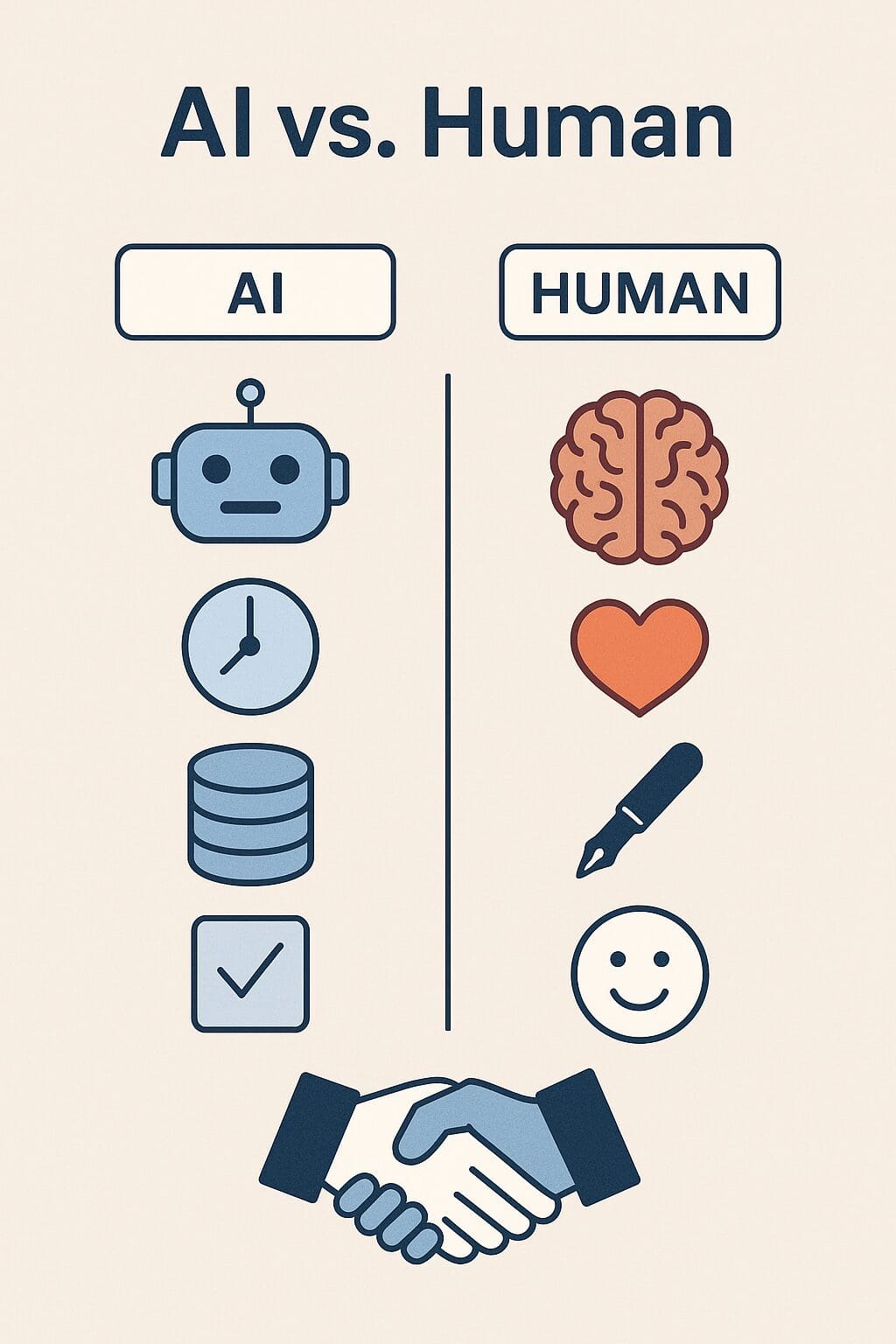
Comparison:
Clarity: Both texts are clear, but the AI version is more structured and general.
Empathy and tone: The human conveys personal experiences with more emotional closeness.
Depth: AI is effective at providing quick tips, but lacks experiential storytelling.
Style: AI maintains a neutral tone; the human allows for nuance and reflection.
Ethical Considerations in Automated Writing
Before concluding, it’s crucial to open the debate on the ethics of using AI in content creation. Should readers be informed when a text has been generated by a machine? What about copyright, knowledge attribution, or the perpetuation of bias in training data?
Additionally, there’s concern about the dehumanization of content: if everything we read is automated, do we lose authenticity and diversity of voices? Ethics also involve corporate responsibility: are creative human jobs being replaced or simply redistributed into more strategic roles? The answer to these questions will define not only the future of writing but the role of creativity in the digital age.
Conclusion
So, can AI write a blog? Absolutely. Can it write one that feels fully human? Not quite yet. The future isn’t about choosing between one or the other but finding a balance that plays to their strengths.
Humans bring creativity, empathy, and a voice that feels real. AI brings scale, speed, and efficiency. The real win comes when the two work together.

Ready to turn AI and human expertise into a real-world advantage?
If you’re exploring how to blend AI and human expertise in your data and analytics strategy, phData can help you design and deliver a practical approach that actually works in the real world.