
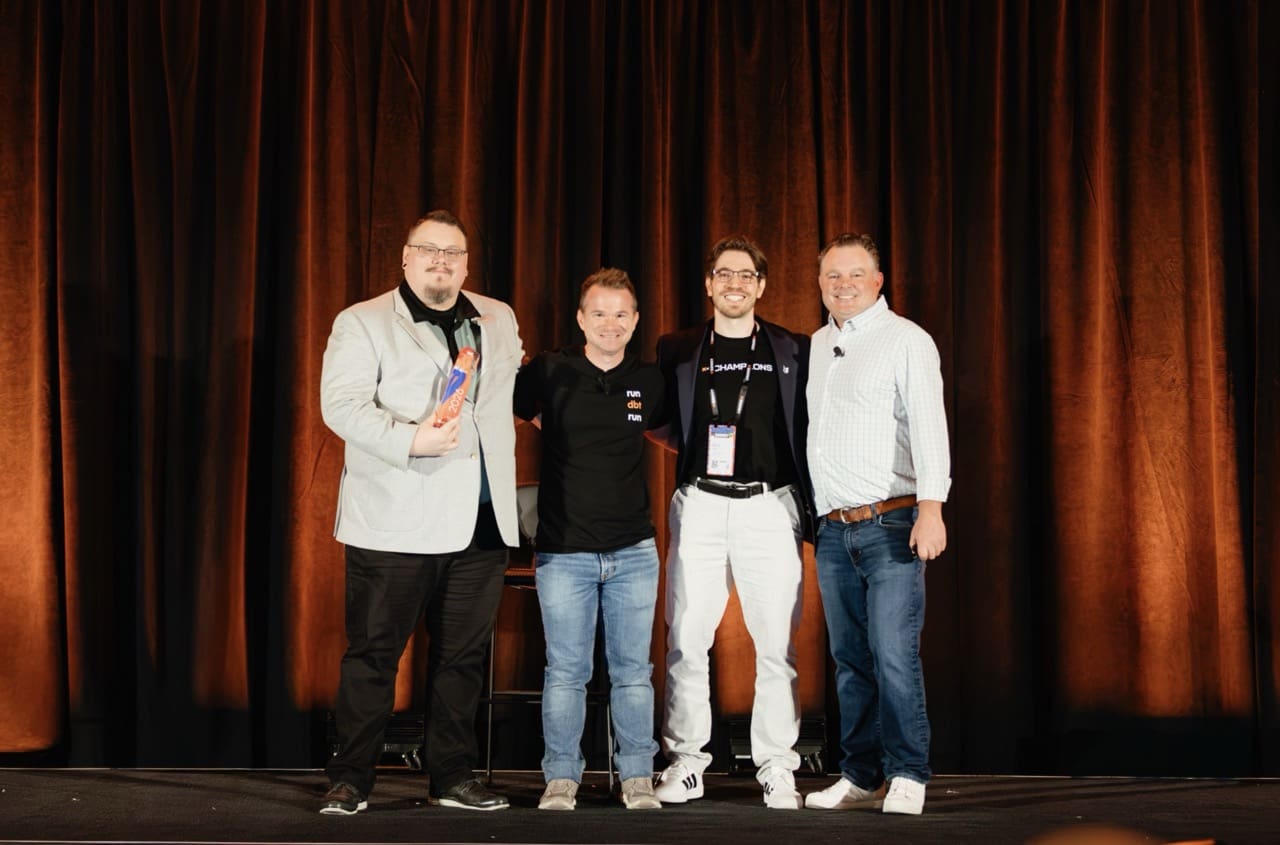
Winning an award once can happen for a lot of reasons. Winning it four years straight means something different. We sat down with Dustin Dorsey, phData’s Senior Director of Data Engineering, to ask what’s behind phData’s fourth consecutive dbt Partner of the Year award.
Q: phData has now won dbt Partner of the Year four years in a row. What does that recognition mean to you and the team?
Dustin Dorsey: Winning once is a meaningful accomplishment, but winning four years in a row reflects something a lot more durable. It’s a sustained commitment to excellence. Each year, the bar resets, and our team keeps deepening its dbt expertise and expanding certifications across the practice.
We’ve made dbt part of how we onboard and develop every consultant, not just a specialty for a small group. That consistency takes more than individual expertise. It takes a practice that learns from each engagement, shares lessons across teams, and keeps raising the standard for how dbt gets used in production. We’re intentional about turning project experience into reusable learning, onboarding, and mentorship.
This award isn’t about one person. It’s a team award. We wouldn’t have it without the people doing the work for our customers every day, their technical excellence, their curiosity, and their commitment to outcomes.
Q: What do you think sets phData apart in the dbt partner ecosystem?
Dustin Dorsey: It comes down to a combination of scale, depth, and real delivery experience. dbt is one of the technologies we use most across our entire data engineering practice, so our consultants apply it repeatedly across customer engagements, environments, and business challenges. It’s not occasional. It’s on almost every project we run.
That matters because customers are rarely looking for dbt in isolation. They’re trying to improve something broader: reliability, governance, speed, not just within dbt, but across their entire data platform. Our experience connects dbt to the surrounding architecture and to the business outcomes customers are actually trying to reach.
We have a large number of dbt-certified consultants, along with authors and community champions who contribute to the broader dbt ecosystem. Some of our team partners directly with dbt product owners to help shape the product, and others contribute to dbt open source on a regular basis. That mix of hands-on delivery, formal learning, and community participation gives customers access to a deep bench of practitioners who know how to implement dbt as part of a broader intelligence platform, not as a standalone tool.
Q: How does phData build and develop dbt expertise across the data engineering team?
Dustin Dorsey: We made dbt part of our core learning path from the beginning. We recruit talent that’s already demonstrated strength here, often people who’ve worked for key dbt partners or key dbt customers. For new members of the data engineering team who haven’t been exposed to dbt in a previous role, we introduce it early, so it becomes a foundational part of onboarding rather than an afterthought.
We also invest in ongoing certification and development. We currently have a large and growing number of dbt-certified professionals across the organization. That learning is reinforced through mentorship and real project experience: more experienced consultants help newer team members apply concepts in customer environments, while our authors and community champions bring lessons from the broader dbt ecosystem back into the practice. Structured learning, delivery experience, and knowledge sharing together are what make this repeatable.
Q: What are you seeing customers prioritize when it comes to dbt and their broader data platforms?
Dustin Dorsey: Many customers are focused on building a trusted, well-modeled data foundation that supports analytics, operational use cases, and increasingly their AI initiatives. Most customers coming to us today are asking how to build the right foundation to enable scalable AI.
dbt is an important part of that foundation because it helps teams create a consistent transformation layer with good practices for testing, documentation, and governance. We’re continuing to see customers adopt dbt at a high rate as they modernize their data platforms and look for reliable ways to turn raw data into trusted, usable information. The impact usually shows up as faster access to trusted data, more consistent data products, and a stronger foundation for the AI use cases the business is asking for.
Q: Looking ahead, what role do you see dbt playing as AI becomes more central to data platforms?
Dustin Dorsey: We expect dbt to remain a key part of how we help customers build modern intelligence platforms and AI-ready data foundations. Most organizations aren’t yet in a place to build AI applications and agents on top of their data and get consistent results. Their data may be fragmented, inconsistently modeled, insufficiently governed, or missing shared business definitions.
Even when a solid foundation exists, many teams haven’t figured out how to apply those practices consistently at enterprise scale. That’s why data modeling, governance, and semantics matter so much for the future of AI. They aren’t just foundational data engineering practices; they’re what let AI applications and agents work from a trusted, consistent context. dbt plays a direct role by helping organizations build repeatable workflows and well-modeled, tested, documented, and governed data products that support the broader AI stack.
We look forward to continuing to support dbt Labs and our shared customers as the platform evolves. Our focus stays on applying dbt where it creates real customer value and turning strong data engineering practices into durable business outcomes.
Is your dbt project stuck between proof of concept and production?
phData has earned dbt Visionary Partner of the Year four years running. Our data engineering team and phData Forge™ methodology take dbt implementations from pilot to production on customer platforms every day.
FAQs
What is dbt, and why does it matter for data platforms?
dbt (data build tool) is a transformation framework that lets data teams build, test, and document data models using SQL, creating a consistent, governed transformation layer. It matters because it gives organizations a repeatable way to turn raw data into trusted, well-modeled data products, which is foundational for analytics, reporting, and AI initiatives.
Why has phData won dbt Partner of the Year four years in a row?
phData has won based on scale, depth, and delivery experience: dbt is used across nearly all of phData’s data engineering engagements, and the practice includes a large number of dbt-certified consultants, authors, and open-source contributors. The team also treats dbt as a core part of consultant onboarding rather than a specialist skill.
How does phData train consultants on dbt?
phData builds dbt into its core learning path from day one, recruiting some talent directly from dbt partners and customers while introducing dbt early to consultants who haven’t used it before. Certification, mentorship, and real project experience reinforce that training on an ongoing basis.
How does dbt support AI initiatives?
dbt supports AI initiatives by enforcing testing, documentation, and governance in the transformation layer, which gives AI applications and agents trusted, consistent data to work from. Without that governed foundation, organizations struggle to get consistent results from AI built on top of fragmented or inconsistently modeled data.
What is a dbt Visionary Partner?
A dbt Visionary Partner is a top-tier recognition from dbt Labs given to consulting partners that demonstrate deep technical expertise, delivery scale, and active contribution to the dbt community and product roadmap.


