

Traditionally, much of artificial intelligence (AI) and machine learning (ML) has been focused on the models themselves. How big the model is, how fast they are and how accurate they can be made. In the ever-evolving landscape of AI, this mindset has begun to shift to the possibility that it is the data – and not the model – that is being used as the foundation for success.
This approach is referred to as Data-Centric AI and it enables production-ready ML applications faster and easier than ever before by focusing on the data that is input into the model rather than the model itself.
In this blog, we’ll explain what Data-Centric AI is, what its benefits are, and how the experts at phData can help you take advantage of this powerful new approach.
What is Data-Centric AI?
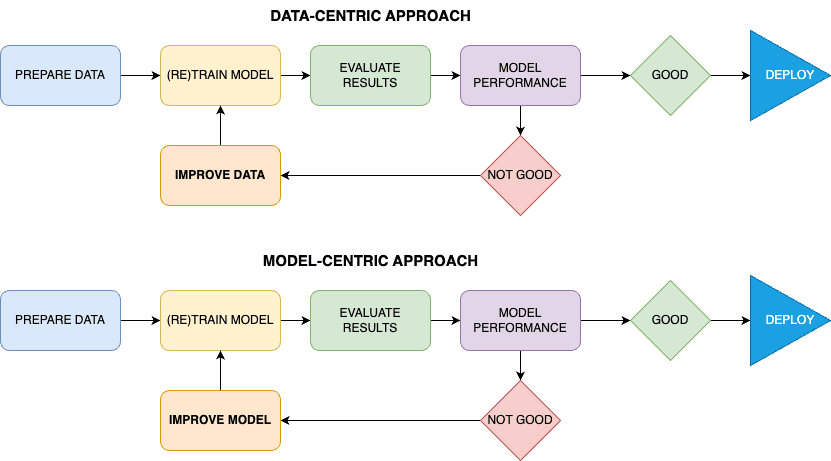
Traditionally, a model-centric approach focuses on the model itself. Data scientists experiment with different algorithms and architectures to improve the model for the available data. This requires extensive tuning and sometimes very complex architectures.
A data-centric approach, however, flips the script to focus on the data first to ensure it is informative, relevant, and well-suited for the desired task. This requires a heavy collaboration between data scientists and domain experts to perform tasks such as:
Data exploration to understand the data’s characteristics, identify potential biases, and determine relationships between features.
Extensive data cleaning to address issues such as outliers, missing values, and inconsistencies.
Creating new features based on existing data, either through domain knowledge or by transforming existing data to be more informative to the model.
The model itself can become more involved in data improvement by identifying data points that are uncertain and asking for human intervention to label them to identify them better on future runs.
What Are the Benefits of Data-Centric AI?
Improved Model Performance
The model’s performance is vastly improved since extra time and effort are spent ensuring the data is clean, accurate, balanced, and representative. This high-quality data reduces noise and helps eliminate biases, improving the model’s generalization ability to unseen data. Since data-centric also involves adding more relevant and domain-expert-created features, the models are more robust and perform well in real-world scenarios.
Promotes Collaboration
Getting the data to its ideal state requires a lot of collaboration between data scientists and domain experts. The technical expertise of data scientists is needed to improve data quality and identify potential biases. At the same time, domain experts provide a deep understanding of the problem the model is trying to solve and the real-world context that can help improve the data.
Also, since improving the data is an iterative process, the collaboration continues as the data scientists find areas where the data can be improved, and the domain experts can provide details on why the data may be misleading or suggest additional features that may be beneficial.
This extended collaboration can help break down silos between data scientists and data subject matter experts by creating a shared focus on data quality that often leads to better model performance at a quicker pace since everyone is working together.
Reduced Development Time
In a data-centric approach, the focus is on the data, not the model, significantly reducing model development time. Teams can build more accurate machine learning applications up to 10 times faster than a model-centric method. Since the data is of high quality, the model can learn effectively from the beginning. This greatly reduces the need for model fine-tuning, which can be time-consuming and expensive.
Accessible to More Users
Because data-centric models focus so little on the models themselves, companies are building applications that allow users to run models in a generalized GUI interface. For example, LandingAI has developed a computer vision application that can run in minutes with a few mouse clicks. This allows for accessibility of machine learning capabilities to users with little to no ML experience.
How phData Helps
At phData, we know data (hence the name) and can consistently get your data in the shape it needs to be to implement a data-centric AI architecture. Here are just a few of the ways we can get you set up for success:
Data Migrations
The first step in successfully building a modern machine learning application is utilizing a modern data stack. ML applications, especially data-centric ones, require huge amounts of data to be ready to be ingested into models. Modern data stacks are built specifically for this use case, allowing you to hold more data, transform it more efficiently, and keep your data more secure than ever before.
Migrating from an old stack can be challenging and time-consuming. phData has performed hundreds of migrations to modern data platforms like the Snowflake AI Data Cloud and leverages that expertise to ensure your migration goes smoothly.
We’ve done so many migrations that we’ve created software (free for any phData customer in perpetuity) to speed up the process and ensure it’s working correctly.
SQL Dialect Translation
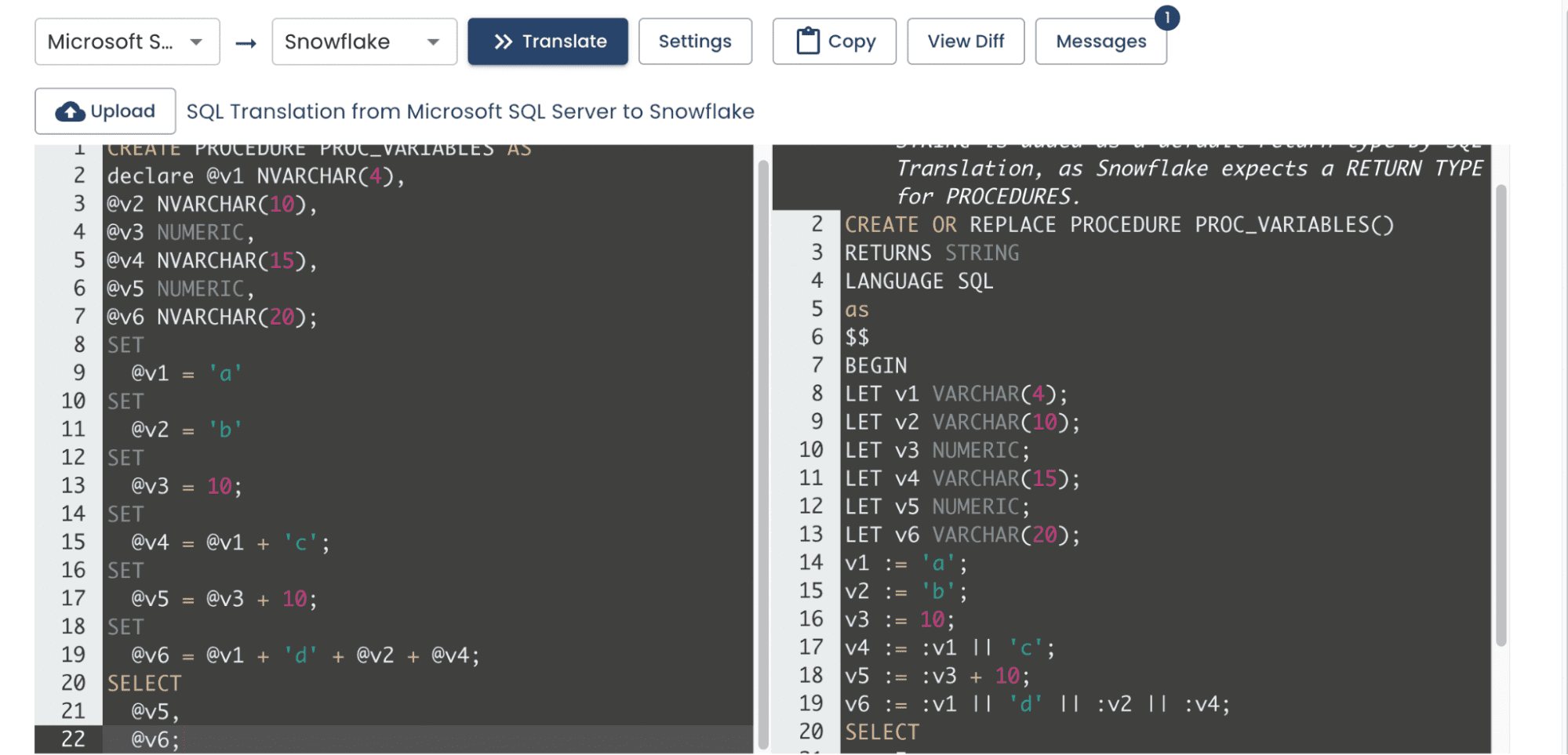
SQL comes in many different flavors, and translating between what your previous data system and your new one use can be tedious and difficult. Slight changes in syntax can be extremely time-consuming to pick out. phData created SQL Translator to alleviate this problem. It allows you to input an SQL statement, and it will translate it to the desired SQL flavor without any human intervention.
Data Source and Target Validation
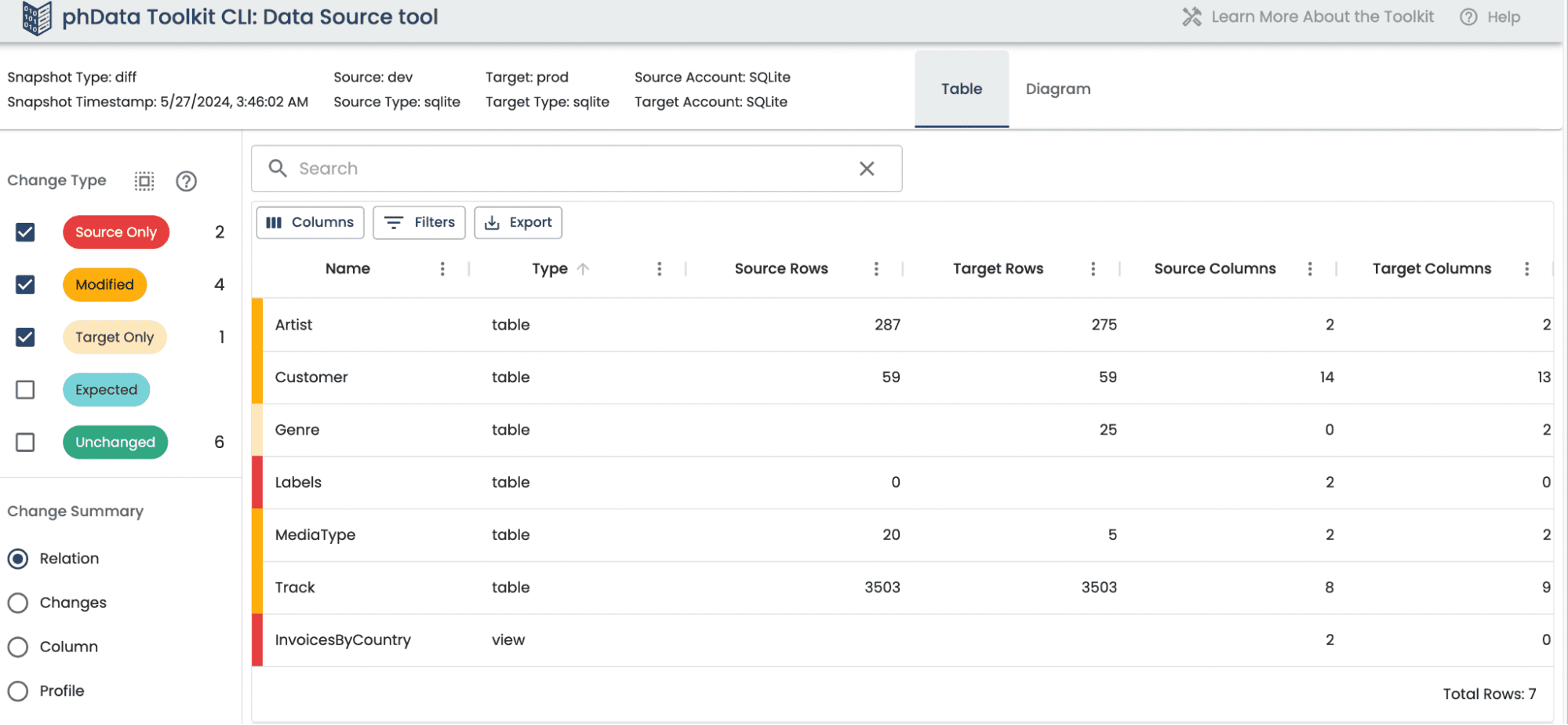
Throughout the data migration process, many things can go wrong or lead the data astray from how it sat in your previous system. Validating that the data was moved correctly is essential to the migration process. phData created the Data Source Tool for exactly that purpose. It can scan and profile both the previous system as the source and the new system as the target and provide metrics detailing how well the migration is going.
Configuration Advisor
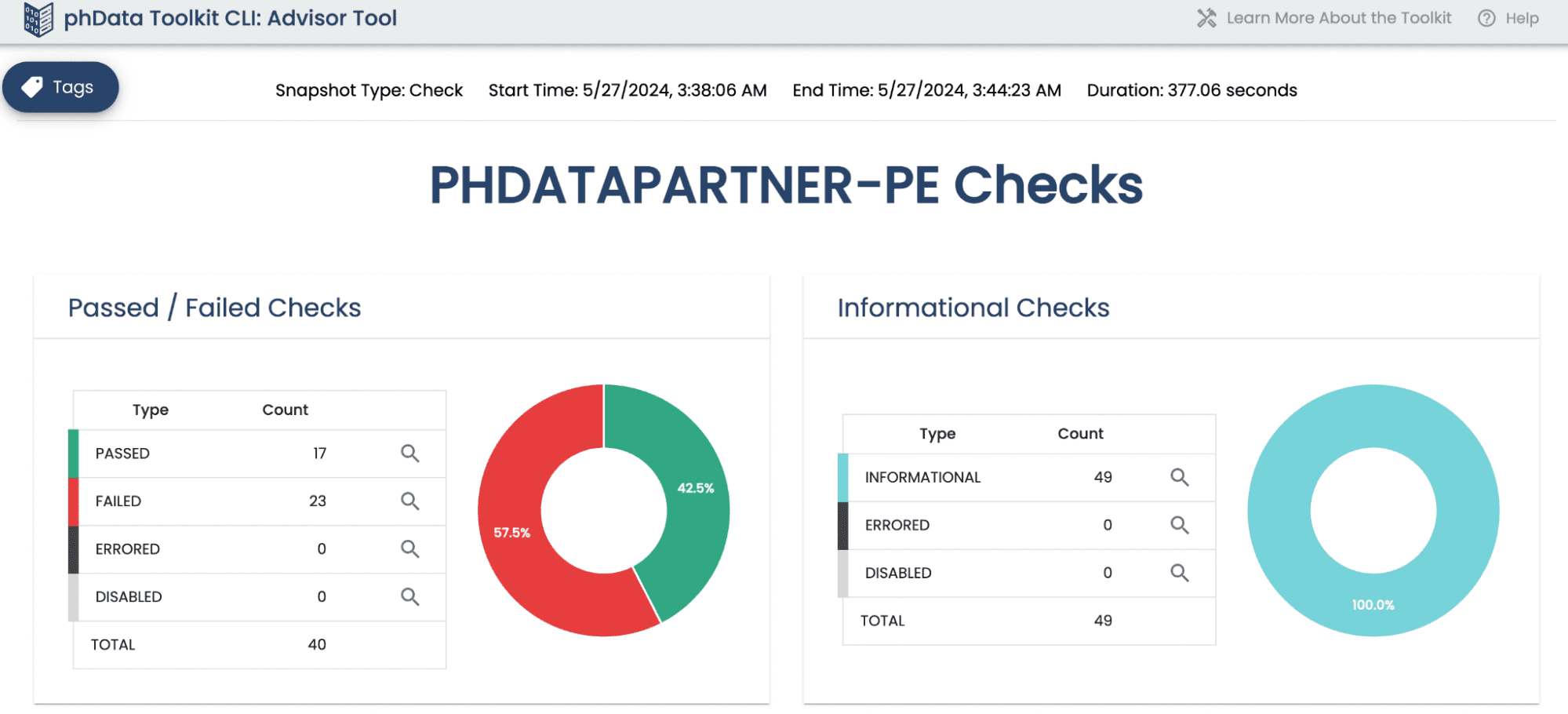
Setting up a new data platform has certain nuances and best practices that you may not know as you align yourself with your new tooling. The best thing to have on your side is a phData engineer consulting you on how to best set up your new accounts. However, we created the second-best thing, the Advisor Tool, which can constantly advise you on the state of your new account and give you details on how to fix it.
Clean Data
Our team of expert data engineers can also help you prepare the data once it’s in a modern data stack. We have advanced knowledge of the top transformation software, such as dbt and Coalesce, to create data pipelines and automate the entire process so your data is always in the right state to run your machine learning applications. We can create the pipelines, teach your in-house resources to use them, help maintain them, or all of the above!
Data Science/Machine Learning Engineers
We’re not just data engineers at phData; we have data scientists and machine learning engineers ready to help with your data-centric AI. Many fledgling data science projects fail because they do not have enough support from experts in the field, and businesses give up on them. Having the right people there to guide you in getting the most out of your AI is what we excel in at phData.
Closing
Data-Centric AI is poised to bring AI and ML applications to more organizations with quick setup time and better results. By prioritizing data quality and treating data as an active participant in the process, you can unlock the true potential of AI. The data experts at phData are here to be your partner wherever you are in your AI journey.

phData is here to help you.
Whether starting or scaling up, we can help you apply Data-Centric AI to drive real results. Connect with us to turn your data into smarter decisions.


